
ROUNDTABLE 3.1
Enabling Green Industrialization at Scale: Policies, Institutions, and Investments
Description
Green industrialization—centered on decarbonizing heavy industry and expanding cleantech manufacturing and services—is increasingly seen as a strategic pathway to achieve the Paris Agreement and the 2030 Agenda. As reaffirmed in the Belém Declaration on Global Green Industrialization adopted at COP30 in Brazil, it can boost economic resilience, competitiveness, and job creation while reducing reliance on volatile fossil fuel markets. Beyond environmental benefits, it strengthens domestic value chains and long-term stability.
However, progress is constrained by fragmented governance, weak coordination, misalignment between energy and industrial planning, and limited demand-side incentives for low-emission products. These barriers exist in Middle Income Countries (MICs) but are especially acute in Least Developed Countries (LDCs), Landlocked Developing Countries (LLDCs), and Small Island Developing States (SIDS), where institutional gaps, high financing costs, and structural vulnerabilities hinder implementation.
This roundtable focuses on translating enabling conditions into practical policy frameworks and coordinated action. It will examine coherent industrial strategies that align climate and development goals, including green incentives, standards and certification, public procurement, trade measures, innovation ecosystems, and public-private partnerships. A key priority is creating predictable policy environments that mobilize private investment, accelerate technology deployment, and generate credible demand signals.
Special attention will be given to sustainable industrialization hubs—integrated industrial clusters combining sustainable energy, shared infrastructure, harmonized standards, and coordinated procurement. These hubs can accelerate decarbonization, strengthen local value creation, and help countries—particularly LDCs and LLDCs—leverage renewable energy and critical minerals to move up value chains. The session aims to identify priority actions and collaborative mechanisms to scale inclusive green industrialization globally.
Speakers
.jpg)





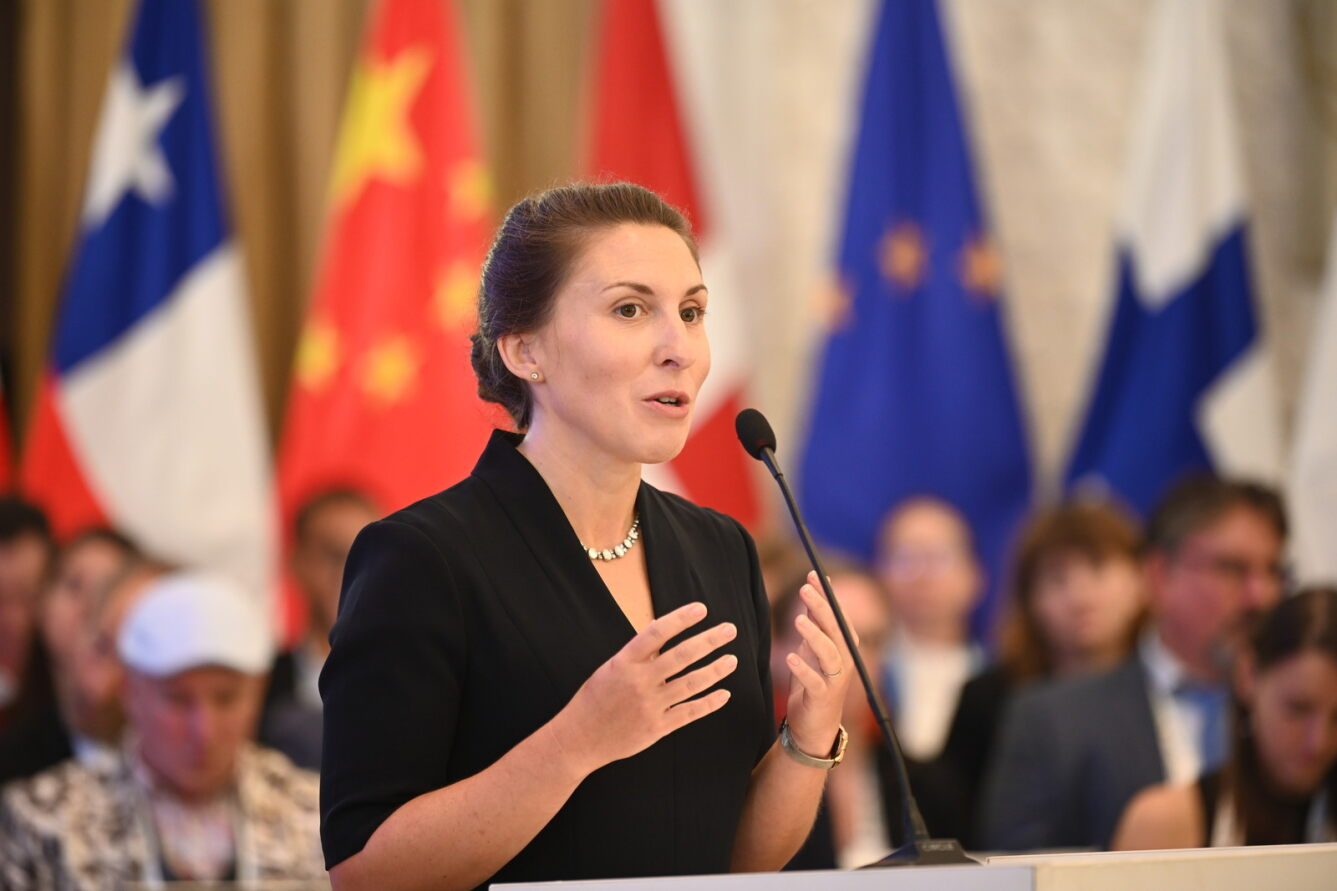

Ms. Maryse Dadina Nkoua Ngavouka
Centre d'Excellence d'Oyo pour les Energies Renouvelables et l'Efficacité Energétique



Ms. Gloria Alvarenga
Latin American Energy Organization (OLADE)

Ms. Sabine Gaber
Oesterreichische Entwicklungsbank AG (OeEB - Austrian Development Bank)

.png)

.jpg)
Ms. Georgia Iordanescu
United Nations Industrial Organization (UNIDO)


Related Sessions
Browse other sessions that explore related topics and perspectives.