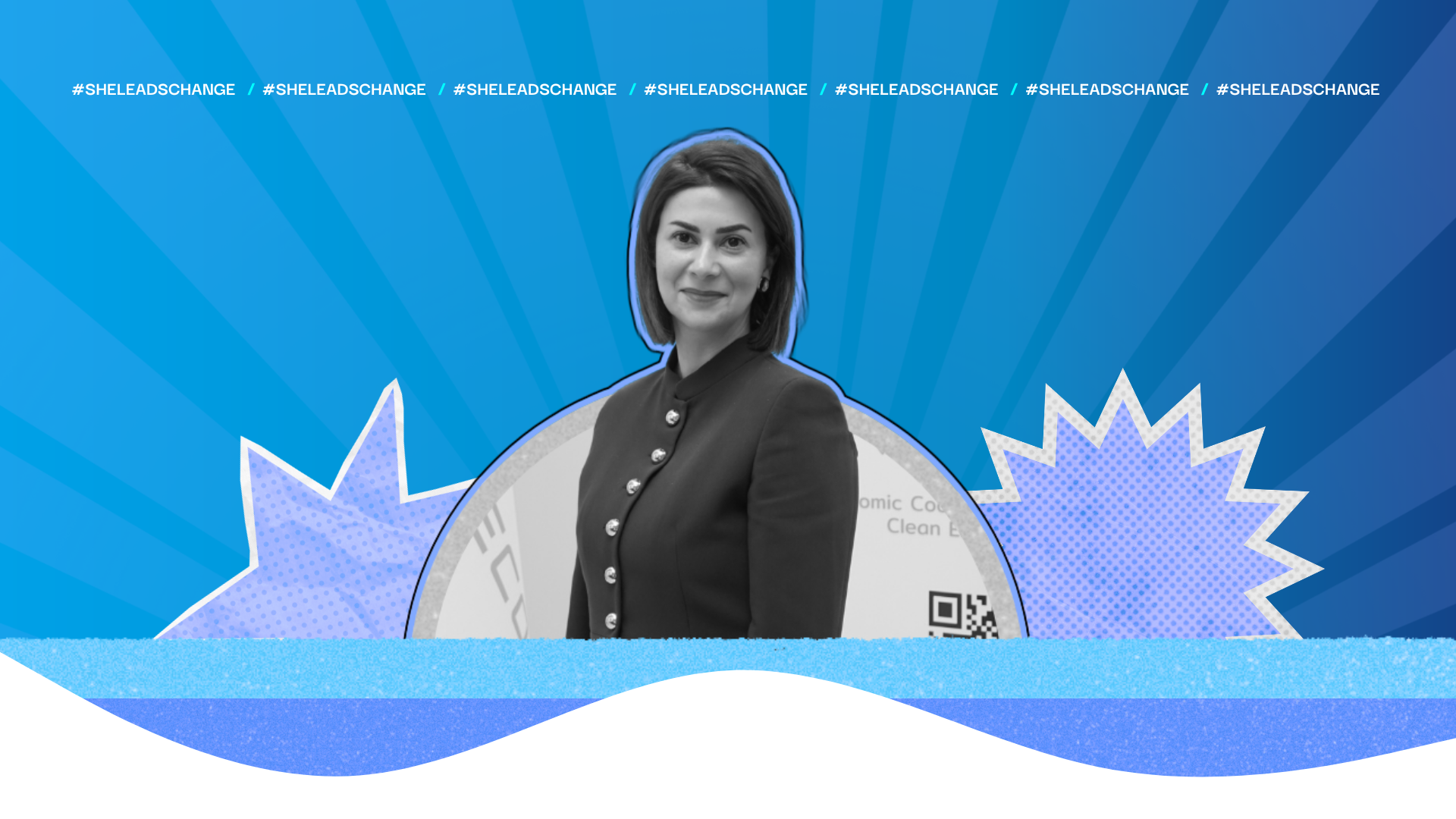
Energy is often discussed in megawatts and markets. For Aysel Yagubova, the Executive Director of the newly established Economic Cooperation Organization Clean Energy Center (CECECO)1 based in Baku, Azerbaijan, it is equally about diplomacy, regional cooperation and inclusion.
Her path to leading a regional clean energy center began in the diplomatic service. Representing her country in missions in the United States, Austria and Iran, she worked on international human rights and humanitarian issues, public diplomacy and communication, while also coordinating cooperation within multilateral fora.
Years of diplomatic engagement have taught her how to coordinate diverse national interests and navigate regional sensitivities. This experience now directly strengthens CECECO’s mission to accelerate renewable energy deployment and improve energy efficiency in the Economic Cooperation Organization (ECO) region.2
“Sustainable energy, environment and climate issues are global. They have no borders,” she says. “Diplomacy is essential to achieving our environmental, climate and sustainable energy goals.”
The ECO region holds vast renewable energy potential. But regulatory frameworks, financial guarantees and institutional capacities differ from country to country. For her, success means mobilizing technical and financial resources so countries can implement projects that strengthen energy security, laying out the foundation for economic prosperity and regional stability.
Aysel believes women have significant potential to help achieve exactly these goals. By empowering women to lead, and participate in decision-taking, the region can unlock an essential source of talent and creativity, accelerating progress toward energy security, sustainable industrial development and long-term regional stability.
Women driving solutions
When asked about women’s leadership in energy and industrial development in the ECO region, Aysel is quick to emphasize that progress is already visible.
Across the region, women leaders are already emerging as heads of start-ups, young innovators, engineers and academics who have become driving forces in their communities. They are designing solutions to energy and climate challenges.
Still, she acknowledges that women need “a bit more push, a bit more empowerment.”
The realities of women in the ECO region cannot be ignored. In many countries, traditional gender roles have limited women’s access to leadership positions in sectors such as energy and industry. It is no secret that household responsibilities often fall on women’s shoulders.
Aysel believes women bring distinct strengths to energy and industrial solutions. In many communities, women bear the responsibility of managing households and experience energy poverty directly. However, lived experiences shape their understanding of practical challenges and often inspire innovative solutions.
“Broader participation of women in the energy sector brings additional perspectives and encourages openness to new ideas, which contributes greatly to just and sustainable energy transition,” she notes.
For Aysel, gender equality goes beyond participation. Women must have equal opportunity to take decisions. Their proposals related to sustainable energy and green industrialization must be taken on board and shape final outcomes.
Going the extra mile
Energy remains male-dominated across much of the world, including the ECO region. “Women have to go the extra mile,” she says. Women may need to demonstrate additional effort so that colleagues, particularly men, recognize their capability and take them fully on board.
However, she emphasizes that women are not seeking to displace anyone. They are not taking someone else’s space. They aspire for equal treatment and professional recognition, which will benefit the whole of society. When women succeed, everyone benefits.
Her message to policymakers is clear: “Ensuring gender equality is not an add-on, it is one of the key pillars of the energy transition. Women-led solutions bring fresh perspectives, creativity and community-focused approaches that are essential for building sustainable, resilient and inclusive energy and industrial systems. Supporting and investing in women’s leadership isn’t just about equality, it’s about unlocking the full potential of the ECO region to tackle its most pressing environmental and economic challenges.”
The organization recently launched the CECECO Clean Energy Hackathon 2026, a regional competition engaging young people from Azerbaijan, Kazakhstan, the Kyrgyz Republic, Pakistan, Türkiye and Uzbekistan to develop digital and data-driven solutions for renewable energy and energy efficiency.
More than 200 proposals were received from across the region, with balanced participation of young women and men. Among the three winners, one is a young woman recognized for her innovative digital solution in energy efficiency.
Powering prosperity, security and stability
As the ECO region navigates energy transition, Aysel’s leadership underscores that sustainable energy is not only about technology or infrastructure, but also about regional cooperation and people. By advancing sustainable energy through cooperation and empowering women to shape solutions, Aysel is contributing to foster a more secure, stable and prosperous ECO region for all.
1 CESECO is one of eight regional centres under the Global Network of Regional Sustainable Energy Centres (GN-SEC) programme managed by UNIDO. For more information: https://www.gn-sec.net/.
2 The ECO region consists of: Afghanistan, Azerbaijan, Iran, Kazakhstan, Kyrgyz Republic, Pakistan, Tajikistan, Türkiye, Turkmenistan, Uzbekistan.